
Blue Lotus: Everything You Need to Know About Its Lore, Chemistry & Dreamwork
read more about the sourcing of ayamani naturals blue lotus here
all information presented in this blog post are for educational purposes only.
Blue Lotus: Flower of the Neteru, Oneirogen of the Ancient World
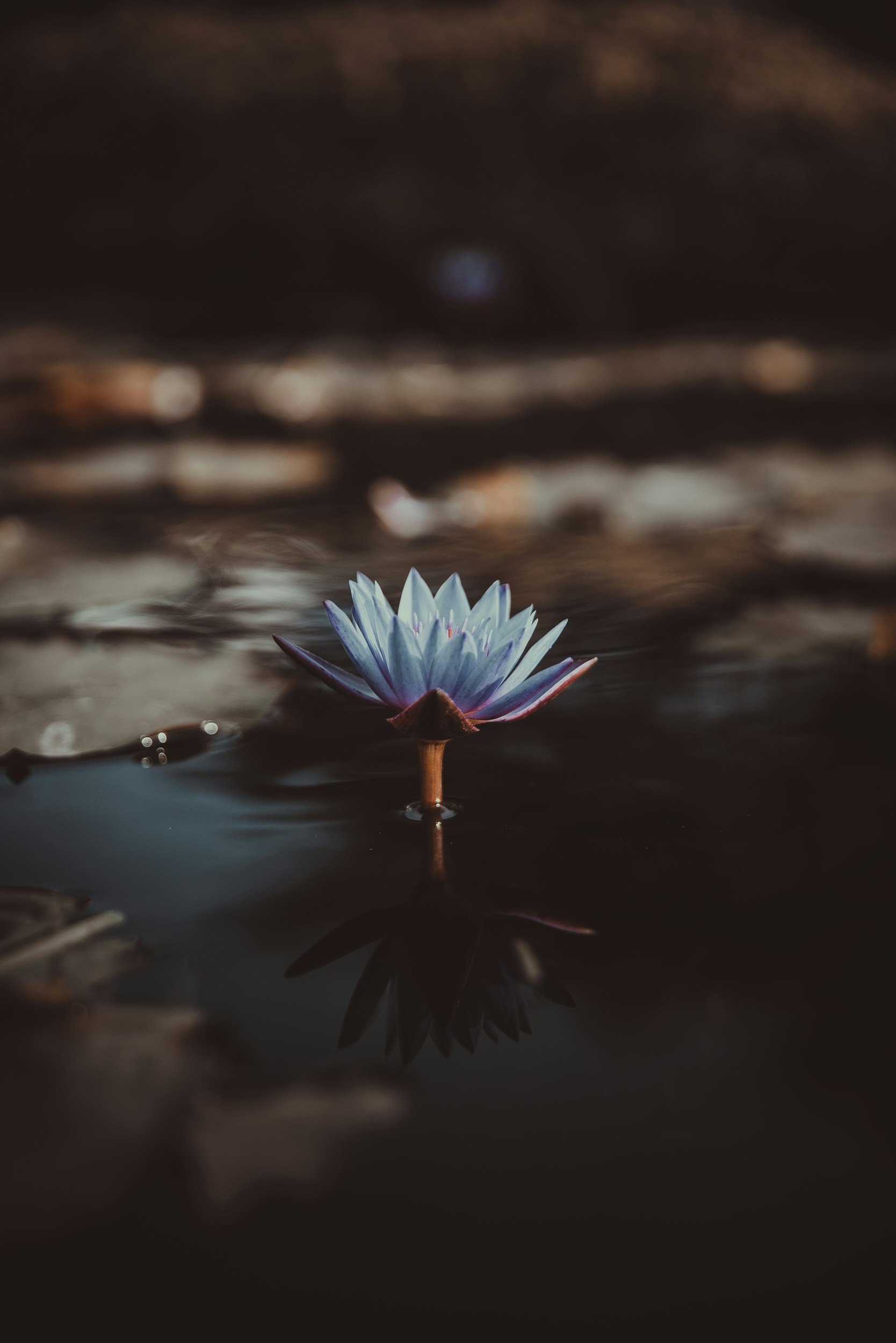
Blue Lotus (Nymphaea caerulea) is one of those plants that doesn’t just enter the room; it glides in softly, shimmering with myth, perfume, and a sense of recognition. For many of us working with plant allies, Blue Lotus is not merely “another herb,” but a cultural artifact, a ritual object, and a symbol of spiritual awakening that has traveled through thousands of years to sit at our tables, altars, and teacups.
I’ve carried Blue Lotus since the very beginning of my shop (seven years now!), and it continues to be one of those plants that draws in both the herbalists and the mystics, the scientists and the dreamers. Few botanicals manage to speak to all four corners at once quite like Lotus does.
A Flower Born on the Waters
Blue Lotus is native to the Nile river basin, appearing throughout dynastic Egypt as both a literal and symbolic plant. A water lily that awakens during the day, opening its celestial-blue petals to track the sun across the sky, and closing again at dusk, it made an irresistible metaphor for rebirth, enlightenment, and the cyclic dance between life and death.
In Egyptian mythology, creation itself emerges from a primordial lotus that opens to reveal the sun god, Ra, which is quite possibly one of the oldest metaphors for “consciousness emerging from the void” in recorded history.
This is one reason the Blue Lotus appears repeatedly in tombs, papyri, and temple carvings: it was both art and theology, deeply human and divine at the same time.
in the body: the science of blue lotus
Historians agree that Blue Lotus was used extensively by the ancient Egyptians in ritual, social, and medicinal contexts. There are depictions of people inhaling its scent, wearing garlands of blossoms, and consuming it infused into wine during banquets and ceremonies.
Modern phytochemistry helps explain that allure: Blue Lotus contains a family of aporphine alkaloids, most notably apomorphine and nuciferine. These are the compounds largely responsible for its gently euphoric, emotionally softening and dream-brightening qualities. Apomorphine has been studied as a non-selective dopamine agonist in conventional medicine, while nuciferine has a more nuanced profile: it interacts with multiple dopamine and serotonin receptors and lightly inhibits the dopamine transporter (DAT), a combination associated with calm focus, reduced anxiety and a smoothing of inner chatter.
In herbal terms, you could say that nuciferine “takes the edge off” the nervous system while keeping the lights on in the subtle realms — which is exactly why Blue Lotus feels so suited to oneirogenic (dream-opening) work rather than heavy sedation.
In pharmacology papers, nuciferine is described as a multimodal ligand with both antagonistic and partial agonist actions at several serotonin (5-HT) and dopamine (D) receptors, giving it a profile somewhat reminiscent of certain “atypical” calming agents, but in a much gentler, plant-based form
This makes Blue Lotus not just a ritual plant, but a pleasure and wellness plant as well, something the Egyptians understood intuitively.
The Oneirogenic Flower & the Third Eye
In contemporary herbalism, Blue Lotus is often categorized as oneirogenic, meaning “dream-inducing.” This class includes botanicals historically used to enhance dream vividness, remembrance, and lucidity. Read more about oneirogenic plants in herbalism here.
Users commonly describe:
depth of relaxation
softened sensory edges
enhanced imagery during sleep
lucid or more narrative dreams
strengthened intuitive perception
a mild opening of ‘third eye’ awareness
While language like “third eye” is metaphoric (referring to pineal activation, inner vision, and intuitive cognition), the subjective experience is remarkably consistent across cultures and time periods. It offers clarity, but in a mist-soaked way; insight, but cushioned in softness.
This is part of Lotus’s magic: it bridges the conscious and the subconscious, waking life and dream space. In ritual, it has been used to access inner vision, soften ego boundaries, and tune attention to subtle realms without overwhelming the nervous system.
The Question of Authenticity: Egyptian vs. Southeast Asian Lotus
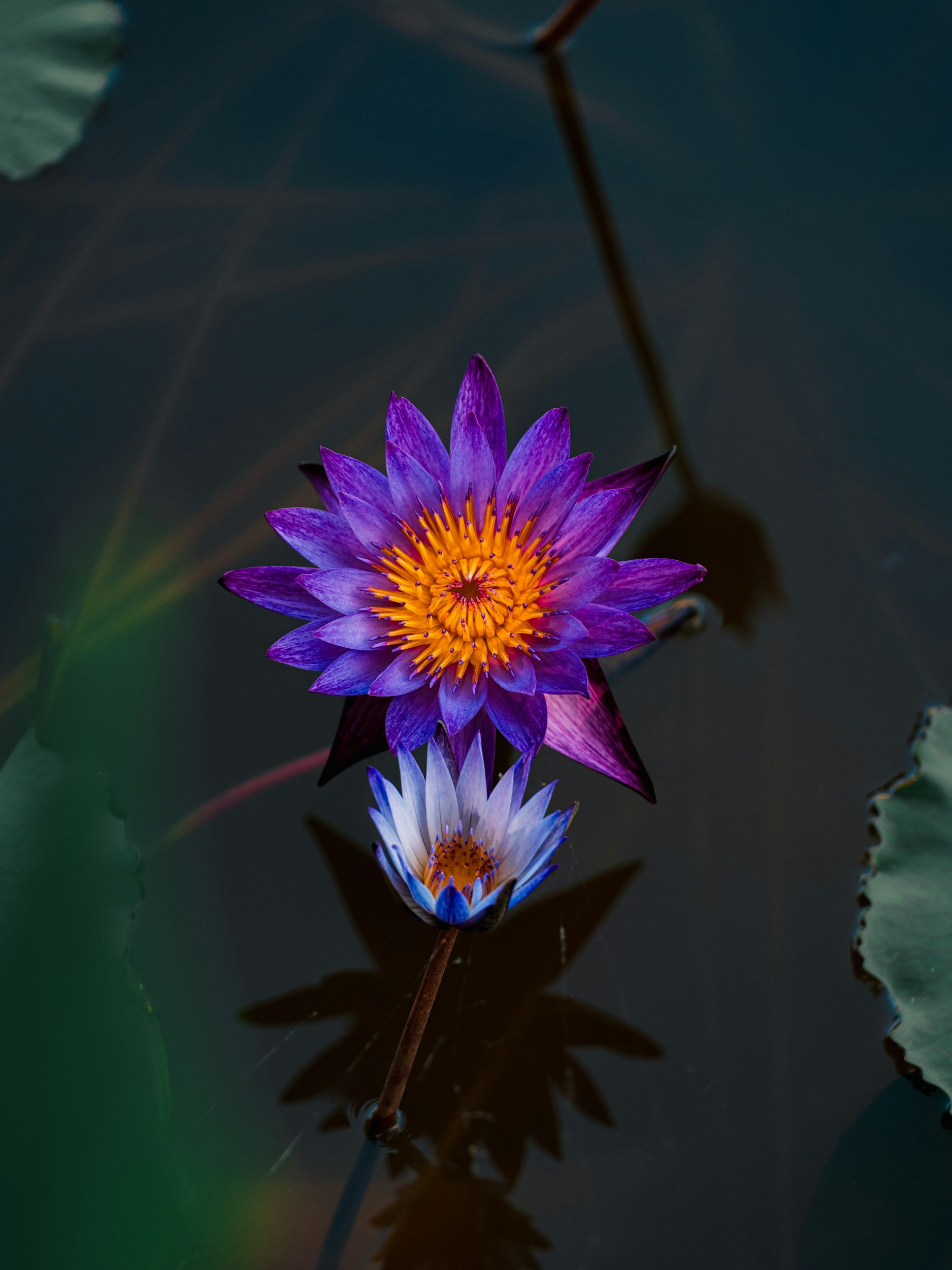
Botanically, many Blue Lotus flowers on the modern market are labeled Nymphaea nouchali var. caerulea, a Southeast Asian variety within the broader “blue water lily” lineage. This is where things get pleasantly taxonomic, depending on which botanist you ask, this variety is treated either as a close relative of the Egyptian Nymphaea caerulea, as a variety within the same species complex, or as a sister species that simply adapted to different waters and climates over time. Classification debates aside, they are extremely close kin, both visually and chemically.
The Thai and Sri Lankan varieties share the same deep indigo blue, star-like flowers and the same key aporphine alkaloids, including nuciferine, one of the compounds associated with Blue Lotus’s calm-euphoric, dream-brightening, and oneirogenic qualities. Alkaloid testing shows a remarkably similar profile, which is why these flowers feel so familiar in ritual and dreamwork even when they come from modern Southeast Asian ponds rather than the Nile.
From a sourcing perspective, it’s also simply where the cultivation is today. Thailand, Sri Lanka, and other parts of Southeast Asia have the right climate, the right aquatic ecosystems, and long-standing traditions of growing water lilies, making them abundant and accessible for the global herbal market. Egyptian-grown Blue Lotus does exist under the radar, it’s just far more boutique, harder to export, and financially impractical at scale, which explains its scarcity and high price.
So while the flowers available today may not be the exact same lilies that once opened beneath the Egyptian sun, they are undeniably part of the Blue Lotus lineage, carrying the same dreamy chemistry and the same ancient temperament, just raised in different waters.
How I Work With Blue Lotus
Because Blue Lotus has been part of my shop since day one, I’ve had time to curate offerings that honor both its ancient mystique and its modern dreamwork. Each preparation meets a slightly different facet of the plant, some for ceremony, some for sensual ritual, some for intuition and vision.
Here are the forms I currently offer:
✨ Whole Flowers & Petals (dried)
The most traditional and ceremonial way to experience Blue Lotus. These can be used on altars, infused, added to incense blends, or used as offerings.
✨ Tincture (10:1 extract)
A potent, fast-acting extraction of Blue Lotus for dreamwork, meditation, or softening into the evening. Tinctures offer precision and ease, especially for those who prefer not to brew tea.
✨ Blue Lotus + Moringa Ritual Oil (with Blue Chamomile)
A sensuous anointing oil for ceremony, self-massage, dream incubation, or after-shower ritual. The Lotus brings the mystical; the Moringa nourishes the skin; the Chamomile soothes the nervous system.
✨ Crown Chakra Tea (Sahasrara blend)
A floral, meditative blend crafted to support contemplation, elevated awareness, and stillness. Think temple incense translated into tea.
✨ Third Eye Chakra Tea (Pineal blend)
A deeper, slightly more enigmatic blend for inner sight, clair-dreaming, and intuitive cognition. Can be used for dreamwork or divination nights.
✨ Dream Rituals Gift Box (with Dreamy Moons Dream Journal)
For the one who dreams (or wants to). A curated ritual set that supports lucid dreaming, dream remembrance, and symbolic exploration through writing.
✨ High Priestess Tea (Tarot Archetype Blend)
A ceremonial blend for the archetypal realm — mystic, lunar, sovereign, intuitive. Blue Lotus meets Mugwort and other star-aligned herbs.
✨ Alchemy of the Spirit Gift Box (Ceremonial Set)
A larger ritual set for those who work with plant allies in ceremony, meditation, and transformational practices. Includes ceremonial cacao, rapé and lots of magic.
A Few Important Notes (Because We Are In 2026, After All)
❓ Are these Blue Lotus flowers certified organic?
Short answer: No, they are not “certified” Organic (noun), they’re just actually organic (adjective).
These flowers are grown naturally and sustainably using Permaculture principles and organic agricultural practices, meaning no chemicals, no pesticides, no synthetic fertilizers, ever. However, my producers have not paid to use the “Certified Organic” trademark, which is a regulated label that requires costly certification. It’s worth noting that even “certified organic” products are legally allowed to contain a certain threshold of chemicals (yes, really). We don’t play that game.
So while we can’t legally call them "certified organic," they are grown beyond organic standards.
Permaculture doesn’t need to pay for a certificate to prove it’s doing the most.
❓ Are the flowers safe for consumption?
Due to bureaucratic regulatory restrictions (especially in the EU), Blue Lotus is not officially classified as a food or supplement. That’s why we must sell it as a “non-food item”.
This is a paperwork issue, not a quality issue. In fact, nearly all Blue Lotus on the market is sold this way, even if people use it traditionally for consumption.
You can put it this way: it’s a dried flower, and people around the world have used it for centuries in teas, infusions, and sacred rituals. What you choose to do with it in the sacred privacy of your home is your business. 😉
